
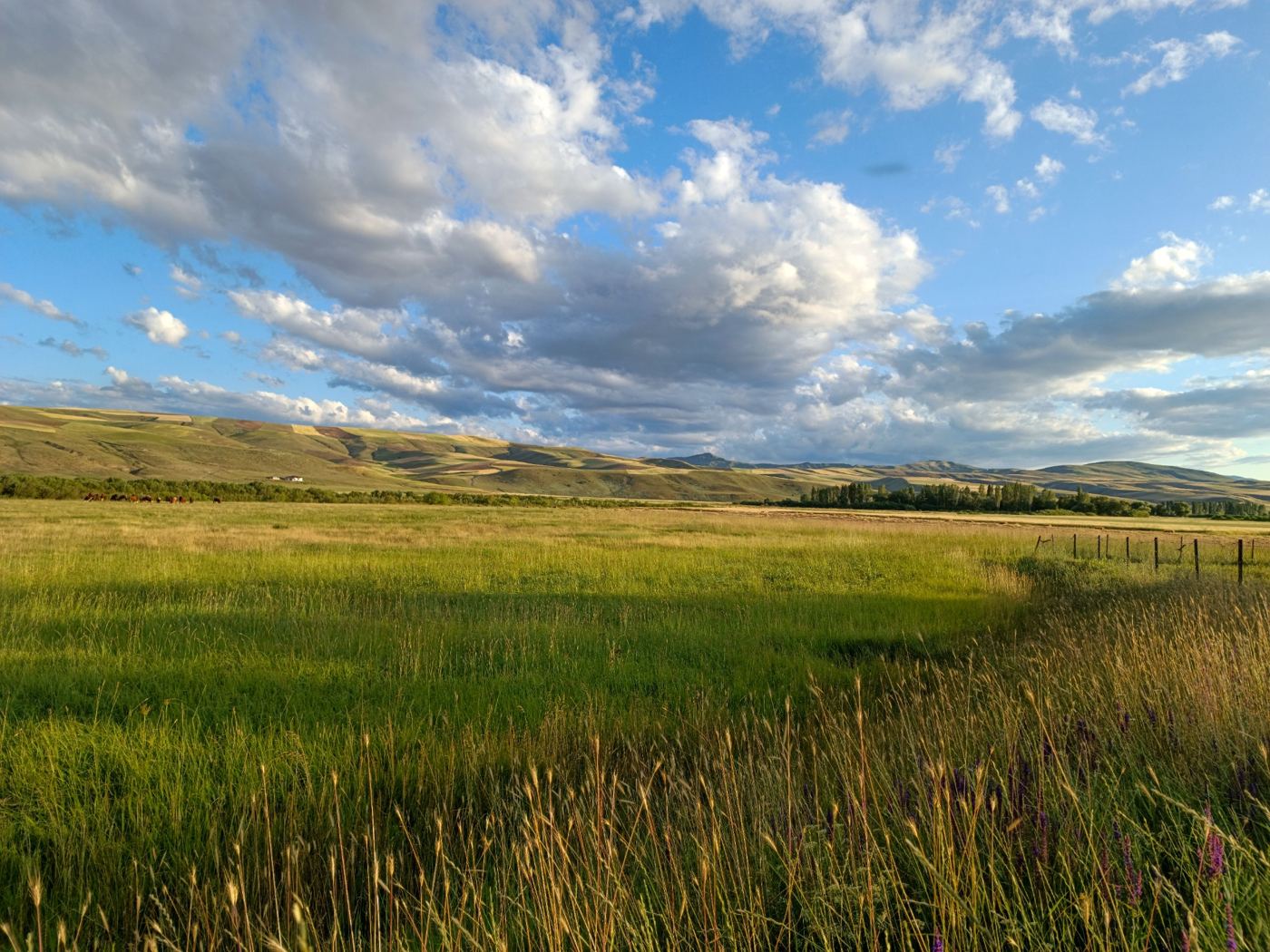
Mihta Askiy Data Centre
A majority Woodland Cree First Nation-owned proposal for a 650 MW campus at the former Carmon Creek site.
The concept begins with 400 MW of data-centre capacity and gas generation, expanding later to 650 MW. The power plant and Sunrise Substation remain under AUC review in the recorded evidence. The federal early decision was not permission to build, and earlier Carmon Creek infrastructure does not establish current water authorization.
Where it stands
Separate approval tracks, not a construction progress bar. Record last verified 2026-08-23.
The record identifies AUC Proceeding 30787 and federal submissions from Northern Sunrise County and Duncan's First Nation. It does not establish a current participation deadline. Majority Indigenous ownership does not replace consultation with other potentially affected communities. See the approval and participation record ↓
Federal principles: Sovereign Digital Infrastructure, identified in the project's federal filing as its 49 per cent owner, is listed as a signatory to Canada's five responsible data-centre development principles. This is a company commitment, not a project approval or permit condition. What the five principles mean →
Power and emissionsCampus demand, electricity supply, and emissions evidence
The project would begin with approximately 400 MW of simple-cycle natural-gas generation and later expand to 650 MW in combined-cycle configuration.
Important distinction: The federal filing's annual greenhouse-gas table is internally inconsistent with its stated generation capacity and emissions intensity. ADCW does not treat the annual total as resolved.
Initial data centre: 400 MW. Two proposed 200 MW phases at the reused Carmon Creek site. [3] Proponent statement
Full-build data centre: 650 MW. The filing describes a later 250 MW expansion. [3] Proponent statement
Initial generation: Approximately 400 MW. Two natural-gas turbines would operate in simple-cycle configuration during the initial phase. [3] Proponent statement
Full-build generation: 650 MW. A later steam turbine would convert the plant to combined cycle and support the expanded data centre. [3][1] Proponent statement
Grid connection: Two 240 kV transmission lines. The filing proposes connections between the project substation and the existing Wesley Creek Substation. [3] Proponent statement
Annual GHG estimate: Not resolved. The filing's annual totals do not align mathematically with its 400 MW capacity and stated 556.906 kg/MWh emissions intensity. An updated air-quality assessment was identified for the AUC process. [3] ADCW context
What remains unresolved
The federal filing's annual greenhouse-gas table is internally inconsistent. A corrected project-specific annual estimate is needed.
Final transmission routing, interconnection terms and the balance between on-site consumption and grid exchange have not been published.
Water, cooling, and drainageSupply, demand, wastewater, and servicing
The filing projects up to 5,000 m³/day (5 million L/day) of water use for the initial phase and discusses earlier Carmon Creek infrastructure. Current licences, intake capacity and required upgrades remain unresolved. [3][8]
Initial daily use: Up to 5,000 m³/day (5 million L/day). A proponent projectionProponent projectionA forecast, target, estimate, or promised future outcome from the company proposing the project.The label identifies whose projection it is. It does not turn a future claim into an independently verified result or an enforceable approval condition.Learn more → for the initial power and data-centre phase. [3] Proponent projection
Historical planning volume: Up to 11,000 m³/day (11 million L/day). The filing discusses water volumes associated with earlier Shell planning. This is not evidence that Mihta Askiy currently holds authorization to withdraw that amount. [3][8] ADCW context
Proposed source: Peace River. The project expects to use or adapt infrastructure associated with the former Carmon Creek development. [3] Proponent statement
Power-plant cooling: Evaporative cooling anticipated. The combined-cycle steam condenser is expected to use evaporative cooling. [3] Proponent statement
Data-centre cooling: Closed-loopClosed-loop coolingCooling fluid circulates repeatedly through a contained loop instead of being routinely discharged after one pass.That describes the loop, not the whole site's water use. A separate heat-rejection system can still use water, and filling, maintenance, and leaks also matter.Learn more → system proposed. The filing distinguishes the data-centre cooling loop from the power plant's anticipated cooling system. [3] Proponent statement
Infrastructure status: Capacity and upgrades unresolved. Northern Sunrise County asked the proponent to confirm the water source, engage affected infrastructure owners and identify upgrades because earlier intake modifications were not completed. [8] Public record
What remains unresolved
The final Water Act licence, authorized withdrawal volume, intake capacity, infrastructure ownership and required upgrades were not established in the reviewed sources.
Sound at nearby communitiesAssessment evidence, controls, and remaining questions
Project-specific sound evidence: Not publicly disclosed. Project-specific sound details were not found in the public sources reviewed. A predicted sound level is not a measurement from an operating facility. ADCW context
Land and site layoutSite footprint and the planning information in the record
Power-site footprint: About 0.206 km² (20.6 ha). The filing describes reuse of the partially developed former Shell Carmon Creek site and says no additional power-plant clearing is planned. [3] Proponent statement
Indigenous contextTreaty geography, engagement, and consultation evidence
Data centre projects sit within treaty territories and places with longstanding First Nations and Métis connections. Treaty boundaries alone cannot tell us which communities may be affected or how they view a project.
Treaty geography: Treaty 8 territory. The federal historical treaty-boundary dataset places the project area within Treaty 8. Treaty geography does not by itself identify all potentially affected communities or consultation outcomes. [6] ADCW context
Project ownership: 51% Woodland Cree First Nation. Woodland Cree First Nation is the majority owner of the project entity. Ownership does not replace consultation with other potentially affected Indigenous communities. Sovereign Digital Infrastructure holds the remaining 49 per cent, according to the federal filing. [3] Proponent statement
Federal review issues: Rights and traditional-use questions remain. The Impact Assessment Agency asked the proponent to clarify consultation, effects on Section 35 rights and traditional land use, and effects of Peace River water use on downstream communities. [4] Public record
Indigenous participation: Duncan's First Nation submitted comments. Duncan's First Nation filed comments in the federal planning process. A public submission identifies concerns for review; it is not a finding that concerns have been resolved. [5] Public record
What remains unresolved
The scope, governance and capacity of the proposed Woodland Cree language and cultural data component have not been published in detail.
Approvals and participationSeparate decisions, public participation, and the recorded timeline
The federal decision means no further assessment under the federal Impact Assessment Act. It is not project approval and does not replace AUC, Water Act or other required authorizations.
AUC facilities: Power plant and Sunrise Substation. Proceeding 30787 covers the 650 MW combined-cycle facility and associated substation applications. [1] Public record
Federal early decision: No further federal assessment required. The Impact Assessment Agency concluded that likely effects could be limited or addressed through other laws. The decision explicitly does not approve the project. [7] Public record
Other authorizations: Still required. The project remains subject to applicable federal and provincial permits, licences and approvals. [7][2] Public record
Municipal concerns: Water, workforce and emergency planning raised. Northern Sunrise County asked for clearer permit status, socioeconomic and housing information, emergency planning and infrastructure commitments. [8] Public record
Recorded timeline
Observed decisions and future dates are kept distinct; projected milestones may change.
2015. Shell suspended the Carmon Creek development, leaving partially constructed industrial infrastructure later proposed for reuse. [3] ADCW context
2025. The proponent submitted the federal Initial Project Description and project-location data. [2][9] Public record
January 2026. Northern Sunrise County submitted comments on permits, water infrastructure, workforce planning and emergency services. [8] Public record
March 3, 2026. The Impact Assessment Agency issued its early decision that no further federal impact assessment was required. [7] Public record
June 2026. The AUC opened public participation in Proceeding 30787 for the power plant and substation applications. [1] Public record
Late 2027. The proponent targets initial 400 MW operation, subject to approvals and construction. [3] Proponent projection
Late 2029. The proponent targets combined-cycle conversion and expansion to 650 MW. [3] Proponent projection
What remains unresolved
The AUC has not issued a final decision on the proposed power plant and Sunrise Substation.
The current status and transfer or reissuance requirements for permits associated with the former Carmon Creek project remain unresolved.
Municipal development approvals, emergency-service agreements, housing impacts, tax revenue and community-benefit commitments remain unresolved.
Company and commitmentsScale, projected benefits, and delivery commitments
Operations employment: About 40 full-time jobs. A proponent estimate for the combined power plant and data centre. A construction workforce estimate was not found in the reviewed filing. [3] Proponent projection
Expected operating life: 30 years. The federal registry describes the proposed operating period. [2] Proponent projection
Project overview
Mihta Askiy is a proposed 650 MW data centre and natural-gas power project at the former Carmon Creek industrial site northeast of Peace River. The project is 51 per cent owned by Woodland Cree First Nation. The federal government decided that a full federal impact assessment was not required, but that was not permission to build. The proposed power plant and substation are still under review by the Alberta Utilities Commission.
What remains unresolved
A final investment decision, committed customers, financing structure and binding construction schedule were not found in the reviewed public record.
The filing estimates about 40 permanent jobs but does not provide a construction workforce estimate or binding local-employment commitments.
Unresolved questions are retained within each relevant topic above.
SourcesOriginal documents and publication details
Source record
Company disclosures establish what the company said, not independent verification of projected outcomes.
- Current applications (search Proceeding 30787)Alberta Utilities Commission · Regulator · Accessed 2026-07-28
- Mihta Askiy Data Center Project registryImpact Assessment Agency of Canada · Federal filing · Updated through July 2026
- Mihta Askiy Data Center Initial Project DescriptionImpact Assessment Agency of Canada · Federal filing · 2025
- Summary of IssuesImpact Assessment Agency of Canada · Federal filing · 2026
- Duncan's First Nation comments on the Initial Project DescriptionImpact Assessment Agency of Canada · Federal filing · 2026-01-22
- Treaty Boundary datasetGovernment of Canada Open Government Portal · Government database · Modified 2026-06-29
- Early decision with reasonsImpact Assessment Agency of Canada · Regulator · 2026-03-03
- Northern Sunrise County submission on the Initial Project DescriptionNorthern Sunrise County · Municipal record · 2026-01-21
- Mihta Askiy project location dataImpact Assessment Agency of Canada · Federal filing · 2025
- Mihta Askiy Data CentreGovernment of Alberta Major Projects · Government database · Accessed 2026-07-28