
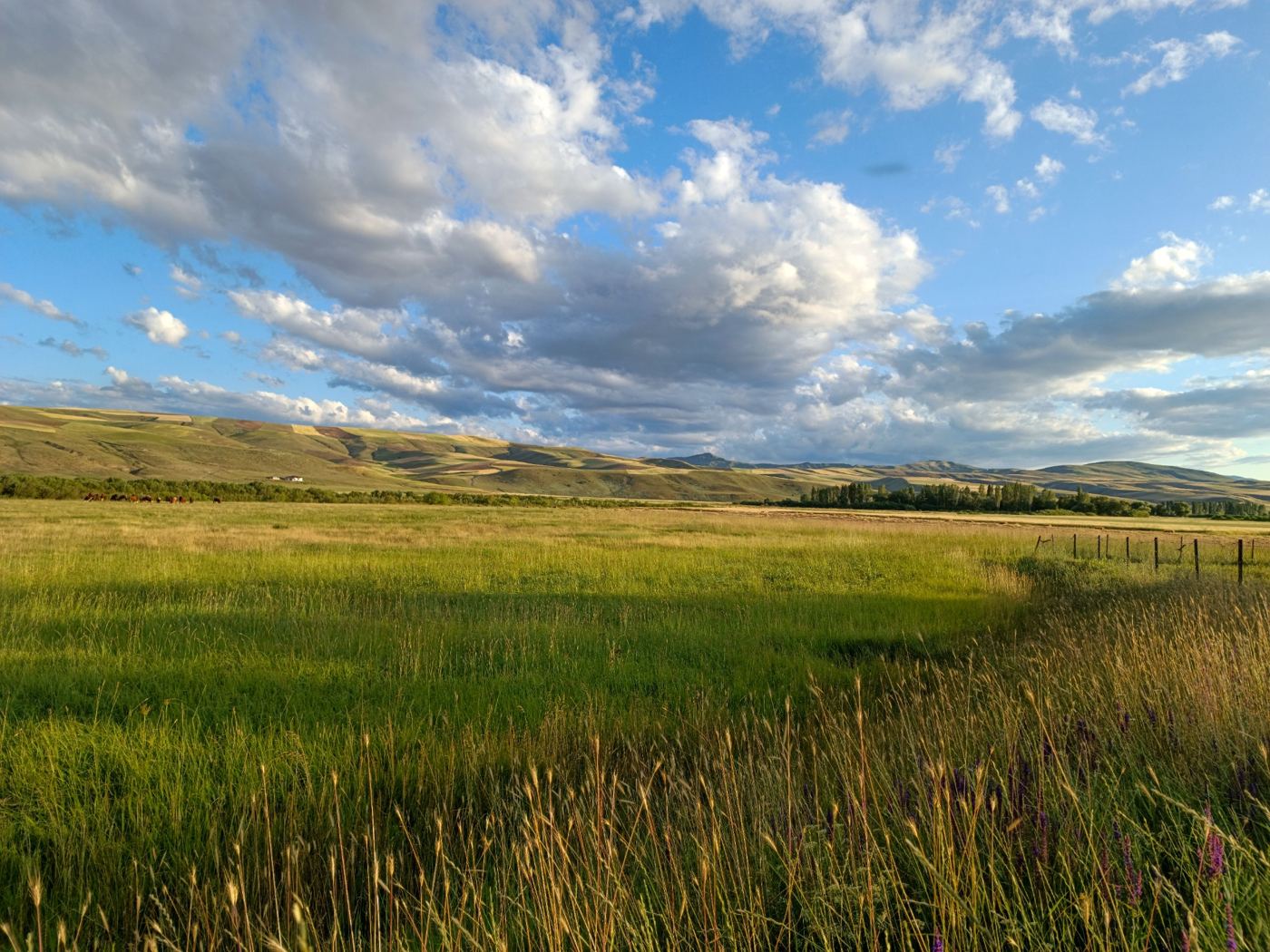
Goldfinch Technology Park Data Centre
A proposed three-phase technology park west of Carseland.
The concept plan is adopted, but a development permit is required for each phase. Final power arrangements remain unresolved; proposed cooling without process water still leaves water needs for staff and fire protection.
Where it stands
Separate approval tracks, not a construction progress bar. Record last verified 2026-10-08.
The recorded planning notice scheduled a July 7, 2026 public hearing. The existing sources do not establish a current participation window. Each phase still requires a development permit; the municipal and developer records are linked below. See the approval and participation record ↓
Power and emissionsCampus demand, electricity supply, and emissions evidence
The grid requestGrid connection requestA request for new or changed electricity delivery capacity through the Alberta Electric System Operator (AESO).Requested capacity is not measured electricity use, a guaranteed connection, or approval to build a data centre.Learn more → establishes a proposed connection scale, not a commissioned facility or a guaranteed supply date.
Important distinction: 650 MW plus 300 MW equals the 950 MW request. These are stages of the same project and must not be counted again as separate campuses or added to the total. MW is capacity, not annual electricity consumption.
AESO request: P3102: 650 MW + 300 MW. Goldfinch Technology Park MPC Load, Stage 2. Both DTS stages have in-service dates under review in the August 2026 list. [4] Public record
Final supply and grid upgrades: Grid supply proposed; arrangements unresolved. The final concept plan says AESO studies will determine whether grid upgrades or new generation are needed and when the site could connect. A grid request does not guarantee electricity supply or a connection date. [7][5] Proponent statement
Off-site power plant: Registry claim not corroborated. Alberta Major Projects describes an independently funded off-site plant. The final concept plan instead describes AESO-coordinated supply and on-site emergency backup. No named plant, location, capacity, or supply agreement was identified in the reviewed project documents. The registry description does not establish a confirmed power source. [9][7][8] ADCW context
Backup generationBackup generationBackup generators provide electricity when the normal supply is unavailable. They may also run for testing or maintenance.Installed capacity does not establish continuous operation, annual fuel use, or emissions. Operating hours and permit conditions are separate evidence.Learn more →: On-site emergency backup proposed. The plan proposes generators to keep the campus running during grid outages. Their number, capacity, specifications, fuel, and operating hours remain unconfirmed, leaving neighbours unable to assess the final backup-power impacts. [7] Proponent statement
Annual electricity use and emissions: Not quantified. No project-specific MWh/year or tonnes CO₂e/year estimate was identified. Connection capacity alone cannot establish either. [4][3] ADCW context
What remains unresolved
Final grid connection dates, network upgrades, cost allocation, and power-supply contracts are not confirmed. The off-site plant listed by Alberta Major Projects remains unidentified in the reviewed project documents.
Project-specific annual electricity consumption, greenhouse-gas emissions and backup-generator air emissions are not quantified.
Water, cooling, and drainageSupply, demand, wastewater, and servicing
Cooling technology: Air-based cooling proposed. Section 4.4 of the final concept plan proposes mechanical air cooling without process water. Policy 7.3.4 still requires cooling systems and any media or chemicals to be confirmed at the development-permit stage. Detailed equipment and performance are not established. [7] Proponent statement
Domestic water demand: About 11,200 L/day estimated. The planning estimate assumes about 100 staff and covers everyday needs such as drinking water and washrooms. It is not measured use or a complete final site water balance; demand will be checked during detailed design. [7] Proponent projection
Fire-water storage: About 1.375 million litres proposed. This is a preliminary reservoir volume for fire protection, not daily water consumptionWithdrawal, consumption, and dischargeWithdrawal is water taken from a source. Consumption is the portion not returned to the same water system. Discharge is water released after use or treatment.These are different quantities. Check which one a water figure describes before comparing projects.Learn more →. The stored supply would support emergency response independently of the supply source during a fire. Final sizing remains a permit-stage decision. [7] Proponent projection
Water supply and approvals: County raw water or on-site wells proposed. The plan considers extending the County's raw-water line about 800 metres or using groundwater wells for domestic and fire-water needs. A proposed connection is not an approved allocation. The final source, authorizations, and full water balance remain unconfirmed. [7][6] Proponent statement
Cooling statements differ: Final plan is more specific than developer updates. Diode's September 3, 2026 announcement leaves cooling selection open and excludes local groundwater and surface waters for cooling. Its project FAQ also leaves the system open. The final concept plan expressly proposes air-based cooling without process water. ADCW records that proposal while keeping final equipment unconfirmed. [7][8][3] ADCW context
Rainwater and snowmelt: On-site containment proposed. The final plan proposes four stormwater facilities to manage runoff on site without relying on off-site discharge. Final sizing and any alternative approach require further technical work and applicable approvals, protecting nearby land and irrigation infrastructure. [7] Proponent statement
What remains unresolved
Detailed cooling equipment, the final water source and authorization, the full site water balance, and final wastewater arrangements remain unresolved.
Sound at nearby communitiesAssessment evidence, controls, and remaining questions
Noise-impact assessment: Required at each development-permit stage. WSP's June submission describes this requirement. Numerical receptor tables were not found in the reviewed public package. A required study is not evidence of demonstrated operating performance. [2] Proponent statement
Mitigation: Proposed, not verified. Diode lists berms, landscaping, sound barriers, generator enclosures and mufflers as possible measures. Final specifications and measured performance are not available. [3] Proponent statement
What remains unresolved
No numerical noise receptor assessment or final generator and cooling-equipment specifications were found.
Land and site layoutSite footprint and the planning information in the record
Planning area: Approximately 576 acres (233 hectares). The June notice gives 576.34 acres. The marker represents the planning area, not a surveyed building location. [2] Public record
What remains unresolved
The June public package lists supporting technical reports but does not reproduce them all. Listing a report does not establish its findings.
Indigenous contextTreaty geography, engagement, and consultation evidence
Data centre projects sit within treaty territories and places with longstanding First Nations and Métis connections. Treaty boundaries alone cannot tell us which communities may be affected or how they view a project.
Treaty geography: Treaty 7 territory. Geographic context only. It does not establish consultation, consent or a community's position on this proposal. [10] ADCW context
Project-specific consultation: Not established in reviewed sources. Participants, concerns, outcomes and accommodation measures were not identified. [2][3] ADCW context
What remains unresolved
Project-specific Indigenous consultation outcomes were not found.
Approvals and participationSeparate decisions, public participation, and the recorded timeline
Planning category: Medium Industrial. The adopted ASP says this category may include technology centres and associated power generation or energy-conversion systems. It is a planning framework, not approval of a final on-site power design. [1] Public record
Final planning instrument: Goldfinch ASP and Diode ACP adopted. The final consolidated plan records the Diode area concept plan as adopted under Bylaw 2025-32 on August 11, 2026. The County archive label and PDF filename call the document Bylaw 2026-32, but the plan itself uses 2025-32. ADCW follows the number printed inside the final plan. [1] Public record
Next permit stage: Discretionary development permitDevelopment permitA municipality's approval allows a specified use or development on a particular site, subject to its land-use rules and any conditions.Separate provincial or utility approvals may still be needed. A permit does not establish that construction has begun or that the facility is operating.Learn more →. The final concept plan requires an approved development permit for each phase before construction. ADCW has not verified an issued project-specific development permit. [7] ADCW context
Detailed design: Still to be submitted. Diode identifies site layout, buildings, noise, servicing and construction timing as later permit details. [3] Proponent statement
Infrastructure cost framework: Off-site levies and development agreements. The adopted ASP says developers will fund utility and road improvements that benefit future development. Front-ending, cost recovery and cost-sharing may apply. No Goldfinch-specific amount or agreement is disclosed. [1] Public record
Recorded timeline
Observed decisions and future dates are kept distinct; projected milestones may change.
March 19, 2025. Application date recorded by AESO for P3102. [4] Public record
June 3, 2026. County notice schedules a July 7 public hearing on the planning proposal. [2] Public record
August 5, 2026. AESO's updated list records Stage 2 and both in-service dates under review. [4][5] Public record
August 11, 2026. Wheatland County adopted the Diode Ventures Data Centre Area Concept Plan within the final consolidated Goldfinch Industrial Area Structure Plan. This planning instrument is not a project-specific development permit. [1] Public record
September 3, 2026. Diode reports the land-use milestone, continued AESO planning, and a commitment not to use local groundwater or surface waters for cooling. It says cooling systems are still to be selected. [8] Proponent statement
2029 (target). Phase 1 opening targeted in the final concept plan, subject to permits, infrastructure availability, and further design. [7] Proponent projection
2031 (target). Phase 2 opening targeted; a separate development permit is required before construction. [7] Proponent projection
2033 (target). Phase 3 opening and full build-out targeted. The schedule may change and is not a guaranteed operating date. [7] Proponent projection
What remains unresolved
An issued development permit, approved building layout, conditions and construction start have not been verified.
Company and commitmentsScale, projected benefits, and delivery commitments
Developer: Diode Ventures. Diode describes itself as a Black & Veatch subsidiary that prepares the site for a future end user. [3] Proponent statement
Future operator and workload: Not confirmed. [3] ADCW context
Proposed phase openings: 2029, 2031, and 2033. The final concept plan targets three phases, with full build-out in 2033. Each needs a development permit before construction, and timing may change with power availability and market conditions. These are targets, not confirmed opening dates. [7] Proponent projection
Registry schedule: 2028–2036 listed; basis unresolved. Alberta Major Projects lists this range without explaining how it relates to the concept plan's opening targets. Construction and opening dates may describe different milestones; no supporting revised schedule was identified. [9][7] ADCW context
Project overview
Goldfinch proposes air-based cooling without process water, but it would still need water for staff and fire protection. The final concept plan targets phase openings in 2029, 2031, and 2033, with a development permit required before each phase can be built. Power remains an unresolved part of the proposal: the plan describes grid supply, while the provincial registry lists an off-site power plant that has not been identified in the reviewed project documents.
What remains unresolved
The future operator, tenants, workload and contracted compute capacity remain undisclosed.
Enforceable cleanup security was not found.
The relationship between the concept plan’s phase targets and the registry’s 2028–2036 schedule remains unexplained.
Unresolved questions are retained within each relevant topic above.
SourcesOriginal documents and publication details
Source record
Company disclosures establish what the company said, not independent verification of projected outcomes.
- Goldfinch Industrial Area Structure Plan, final consolidated planWheatland County · Municipal record · Adopted 2026-08-11; accessed 2026-09-09
- PL2025-005: June public-hearing notice, WSP submission letter and conceptual mapsWheatland County / WSP for Diode Ventures · Municipal record · 2026-06-03; submission letter 2026-06-01
- Goldfinch project updatesDiode Ventures · Company disclosure · Accessed 2026-08-30
- August 2026 Connection Project List: P3102, row 173Alberta Electric System Operator · Regulator · 2026-08-05
- Connection Project ReportingAlberta Electric System Operator · Regulator · Updated 2026-08-05; accessed 2026-08-30
- Goldfinch Raw Water LineWheatland County · Municipal record · Accessed 2026-08-30
- Diode Ventures Data Centre Area Concept Plan, final: sections 4.4, 4.7, 7.1, and policy 7.3.4Wheatland County / WSP for Diode Ventures · Municipal record · Cover: August 2026; County file label: 2026-09-11 Final; accessed 2026-10-08
- Goldfinch Technology Park reaches land use milestone in Wheatland CountyDiode Ventures · Company disclosure · 2026-09-03; accessed 2026-10-08
- Goldfinch Technology Park: provincial registry descriptionGovernment of Alberta / Alberta Major Projects · Government database · Accessed 2026-10-08; update date not established
- Treaty Boundary datasetGovernment of Canada Open Government Portal · Government database · Modified 2026-06-29